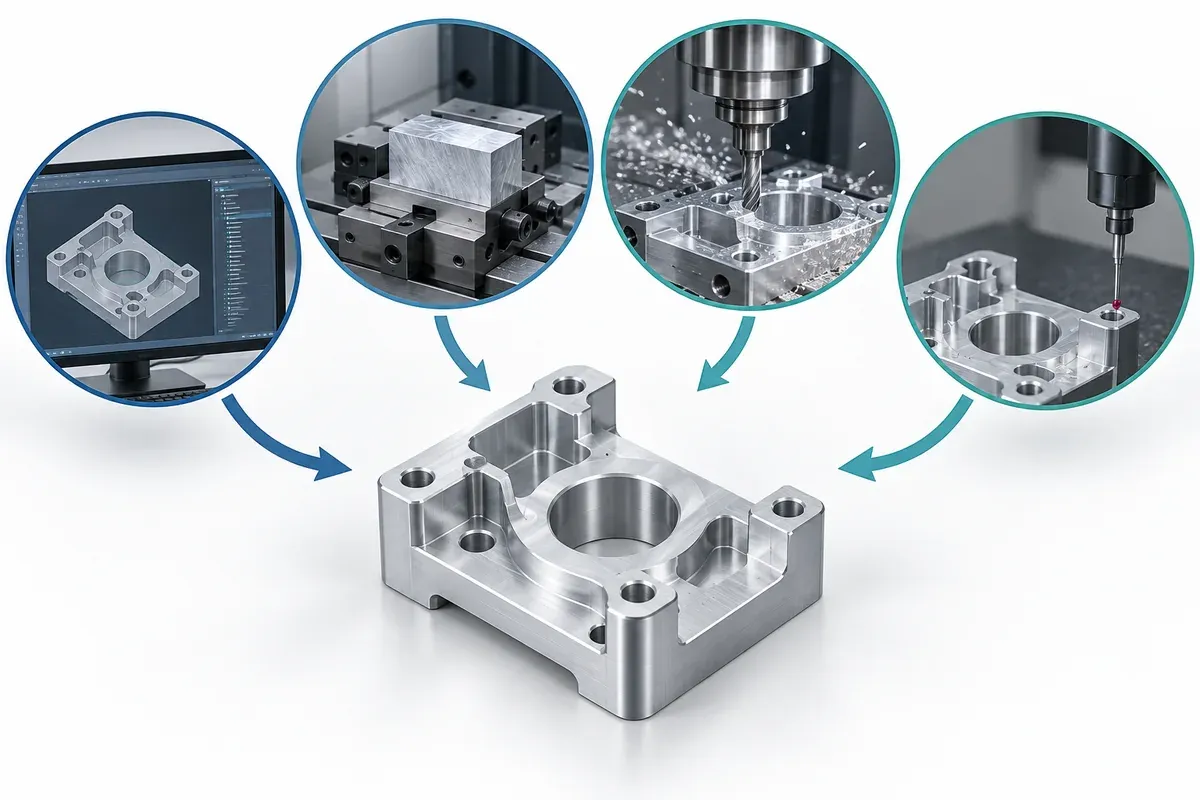
Sep 18, 2026CNC Machining Guides
Black Oxide After Heat Treatment: What Buyers Should Verify
A real tool steel order shows why completed black oxide processing may still lead to a finish question. Learn what to define before production and verify before shipment.
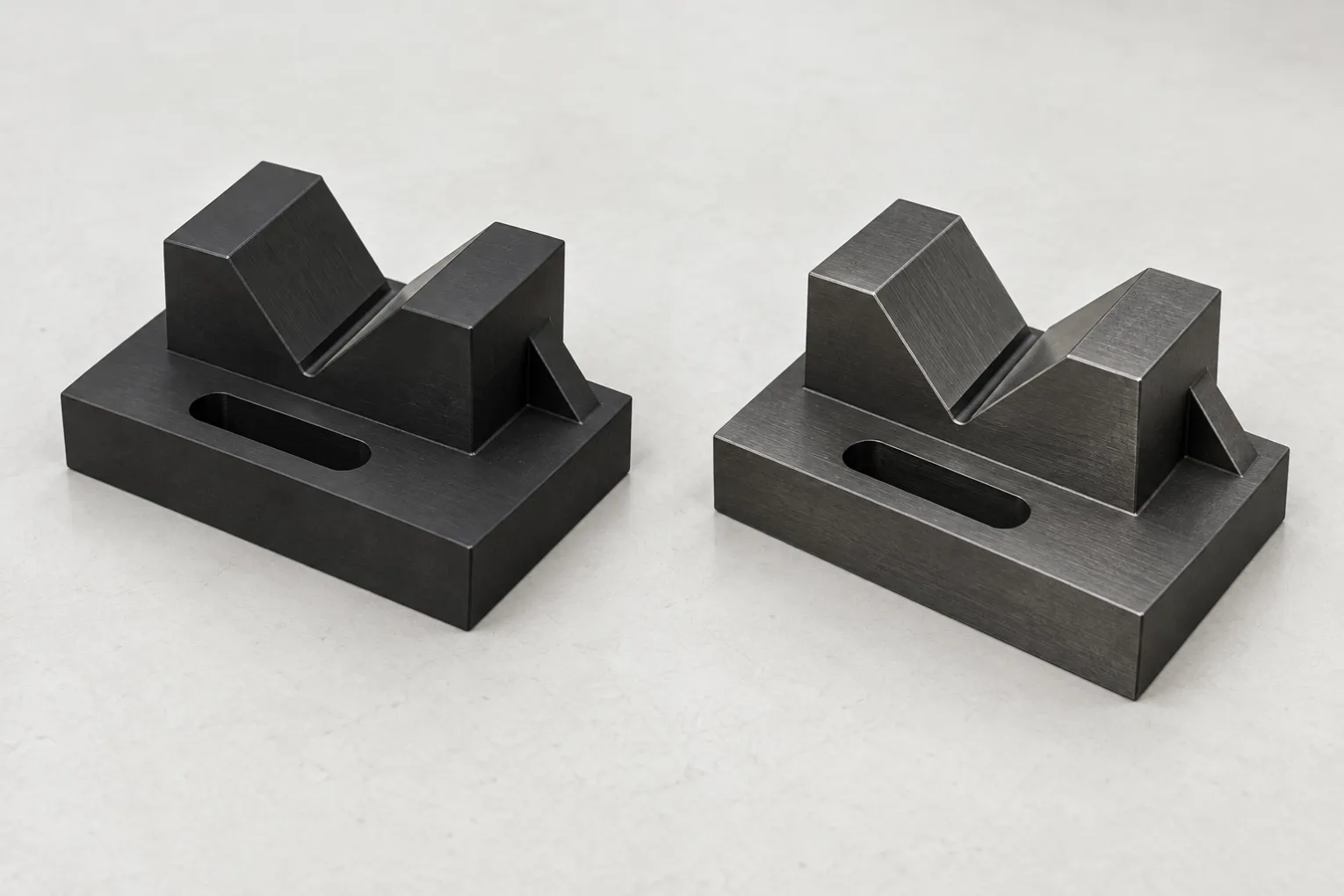
Illustrative black oxide appearance comparison — not actual customer parts.A customer can receive a hardened steel component and still question whether the specified black oxide was completed.
This does not always mean that the finishing process was omitted. The manufacturing record, incoming surface condition and delivered appearance must be reviewed together.
A recent build-to-print order showed why this distinction matters.
A Real Case: Black Oxide Was Applied, but the Finish Was Questioned
The drawing specified:
- A2 tool steel
- Heat treatment to 56–58 HRC
- Descaling after heat treatment
- Black oxide as the final surface finish
An additional bright-finishing operation was introduced before heat treatment with the intention of improving cosmetic appearance. That operation was not required by the drawing.
The production record showed that black oxide was applied after hardening. However, the finished component appeared lighter than the customer expected, making the treatment difficult to recognize visually.
The customer accepted the parts for this order but asked that all specified metal finishing be checked more carefully on future production.
This case supports three conclusions:
- An unspecified cosmetic operation should not be added without approval.
- A completed process record does not replace inspection of the finished appearance.
- The available evidence does not prove that bright finishing was the only cause of the lighter appearance.
The lesson is not that every polished tool steel part will develop the same color. It is that surface preparation, process sequence and visual expectations must be agreed before production when appearance affects acceptance.
Why Black Oxide Can Look Different on Hardened Steel
Black oxide is a conversion treatment that follows the existing metal surface closely. It does not hide the texture produced by machining, grinding, polishing or blasting.
A smooth surface can appear glossier after black oxide. Under some lighting, it may also look visually lighter than a matte surface.
Other factors can influence the result:
- Tool steel grade and material condition
- Final hardness
- Heat-treatment scale and its removal
- Surface preparation before black oxide
- Cleaning and activation
- Black oxide process control
- Oil, wax or another post-treatment sealer
- Lighting used during inspection or photography
A lighter or uneven appearance should therefore trigger a review. It should not automatically be treated as proof that the coating was omitted, nor should the process record alone be treated as proof that the delivered appearance is acceptable.
Confirm the Manufacturing Sequence Before Production
For a hardened precision steel component, a typical route may be:
- Rough and intermediate CNC machining
- Heat treatment to the specified hardness
- Removal of heat-treatment scale
- Required finish machining or grinding
- Deburring and cleaning
- Black oxide
- Specified sealing or corrosion protection
- Final dimensional and surface inspection
The actual route depends on the drawing, geometry, tolerances and functional surfaces.
Machining, grinding or filing performed after black oxide can remove the converted surface locally. If any surface must remain uncoated or requires machining after treatment, identify it on the drawing.
An intermediate polishing operation may sometimes have a manufacturing purpose, but it should not be assumed to define the final cosmetic condition. Where appearance matters, the required surface preparation should be confirmed before black oxide.
For broader A2 material, heat-treatment and low-volume sourcing considerations, see Low-Volume A2 Tool Steel Machining: RFQ Considerations.
What to Define on the Drawing or RFQ
A note that only states “BLACK OXIDE” communicates the required treatment but may not fully define the expected appearance, sealing requirement or acceptance method.
Add the controls that matter to the application.
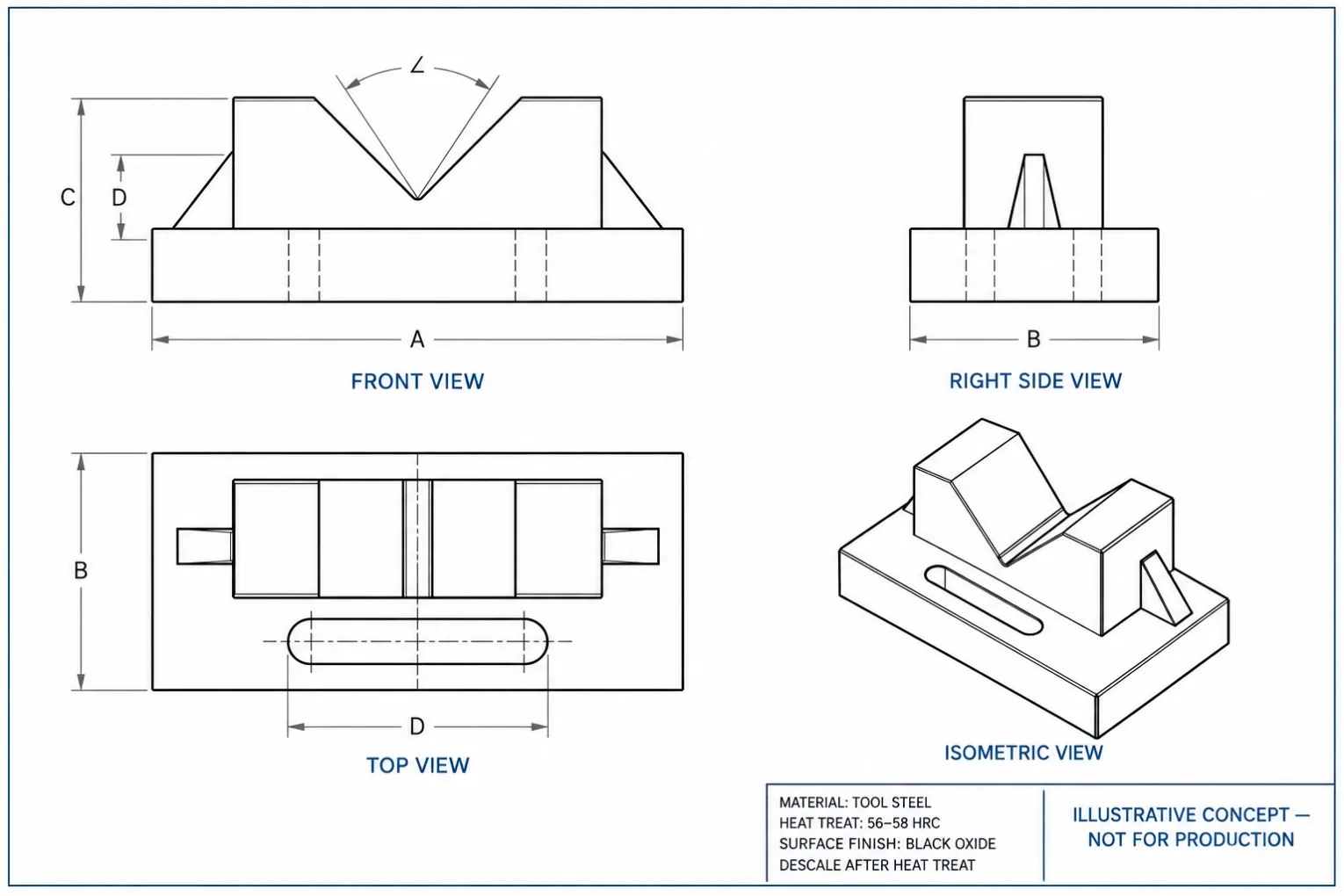
Requirement | What the buyer should define |
|---|---|
Material | Steel grade and material condition |
Heat treatment | Required final hardness |
Process sequence | Required descaling, grinding or finishing after heat treatment |
Incoming surface | As-machined, ground, polished, blasted or another defined condition |
Black oxide | Applicable specification and revision, when required |
Appearance | Matte, satin, glossy or comparison with an approved sample |
Excluded surfaces | Threads, bores, mating faces or other areas not to be treated |
Post-treatment | Oil, wax, dry-to-touch seal or another specified treatment |
Inspection evidence | Visual check, photographs, process record or required certificate |
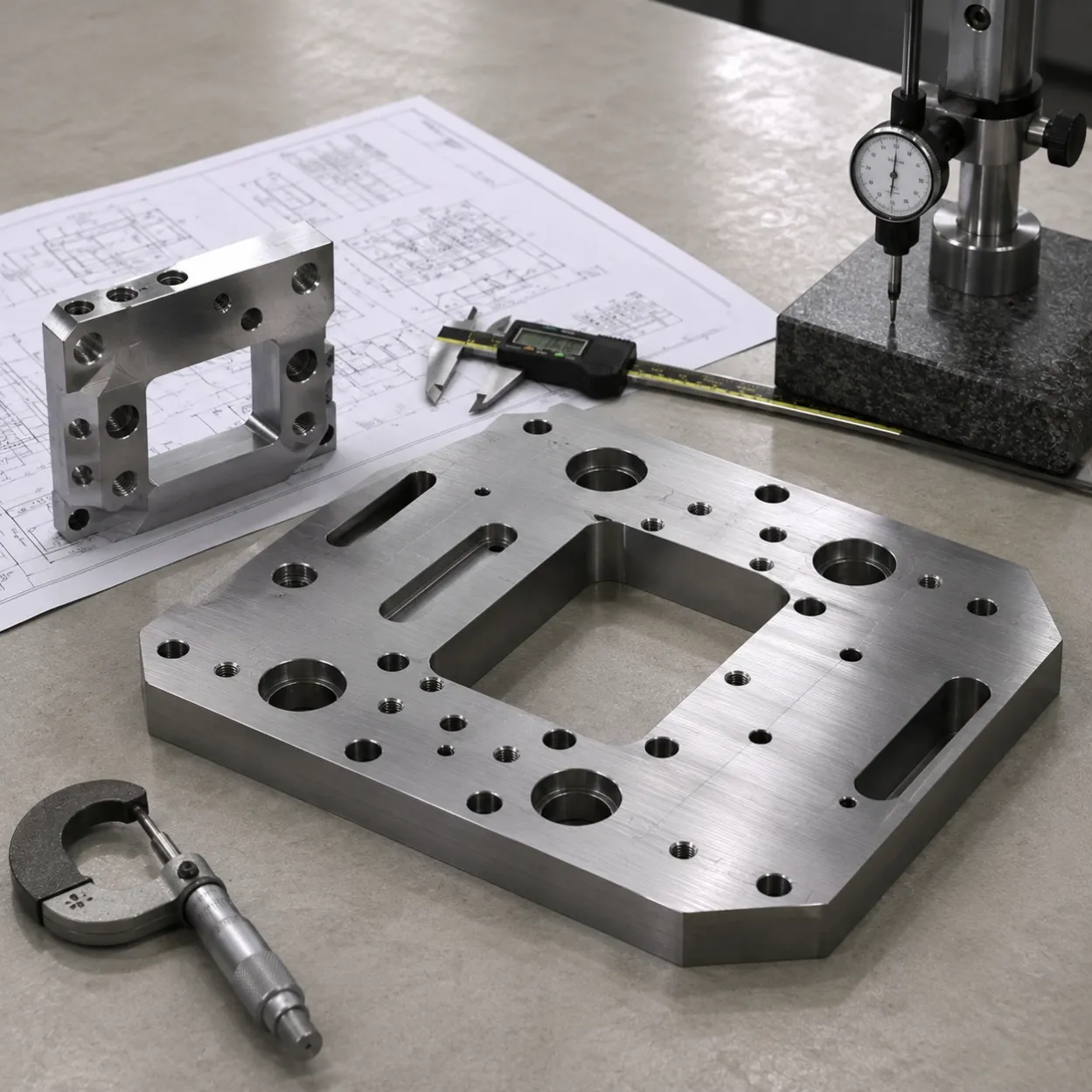
Illustrative drawing showing material, hardness and black oxide requirements — not for production.
Not every order needs every item. A functional internal machine component may not require a tightly controlled cosmetic appearance. A customer-facing component or optically sensitive assembly may require a reference sample or defined visual acceptance criteria.
The drawing should identify the finished condition that matters to the application rather than leave the manufacturer to decide what looks better.
YSBK Review Boundary
YSBK can review CNC machining, heat treatment, finishing and inspection requirements as one build-to-print package.
Our role is to manufacture against customer-approved documentation and identify requirements that need clarification before production. We do not determine the customer’s preferred cosmetic appearance or change drawing-defined requirements without confirmation.
Depending on the agreed quotation scope, supporting documentation may include:
- Material certificates
- Dimensional inspection reports
- Hardness reports
- Finishing or process documentation
- Pre-shipment photographs
These items are not automatically included with every order. State the required documentation during the RFQ stage so its scope can be confirmed and included in the quotation.
Photographs can help confirm visible condition, but they do not replace a drawing requirement, approved sample or formal process record.
What to Send for Review
For a hardened steel part requiring black oxide, send:
- Current approved 2D drawing
- STEP or STP model
- Material grade and condition
- Required final hardness
- Required black oxide specification, if applicable
- Surface preparation and appearance requirements
- Surfaces requiring exclusion or special handling
- Required sealer or corrosion protection
- Quantity for each drawing number
- Required inspection records or certificates
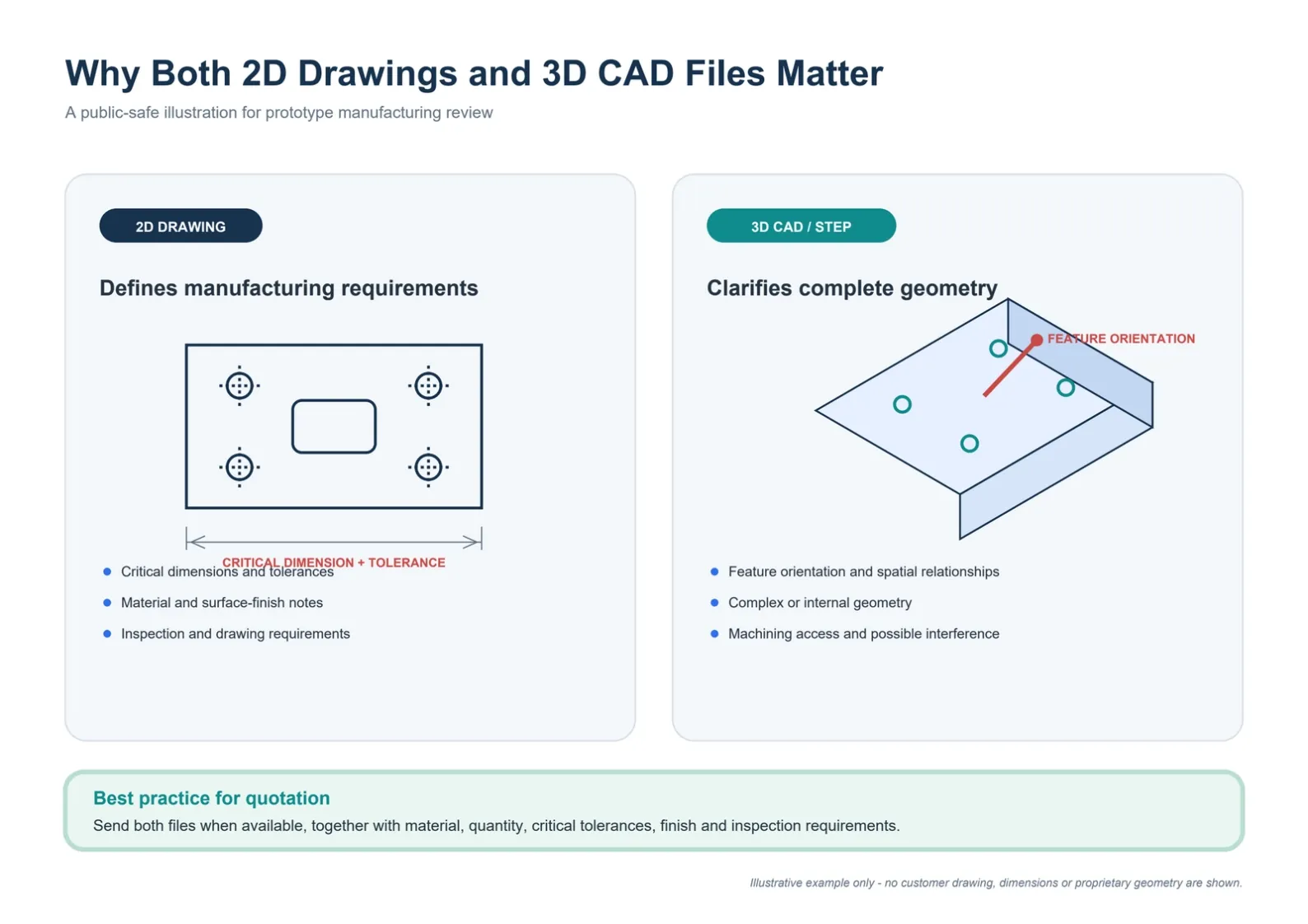
If the 3D model and drawing serve different purposes in your quotation package, see 2D Drawing vs 3D CAD for a CNC Prototype Quote.
Have a hardened steel component that requires black oxide?
Send the drawing, STEP file, material, hardness, quantity and finishing requirements through our Custom CNC Machined Steel Parts quotation page.
Frequently Asked Questions
Is black oxide normally applied before or after heat treatment?
For hardened tool steel parts, black oxide is normally applied after heat treatment, descaling and required final machining or grinding. The actual sequence should be reviewed against the drawing before production.
Can a polished surface make black oxide look lighter?
A polished surface can produce a glossier appearance and may look visually lighter under some lighting. This does not by itself prove that the treatment is incomplete. Material, hardness, cleaning, process control and sealing may also affect appearance.
Is “BLACK OXIDE” alone enough on a drawing?
It may identify the required treatment, but it may not define a particular appearance, process standard, sealing requirement or inspection method. If any of those factors affects acceptance, state it on the drawing or RFQ.